What an AI Workflow Is (and What It Is Not)
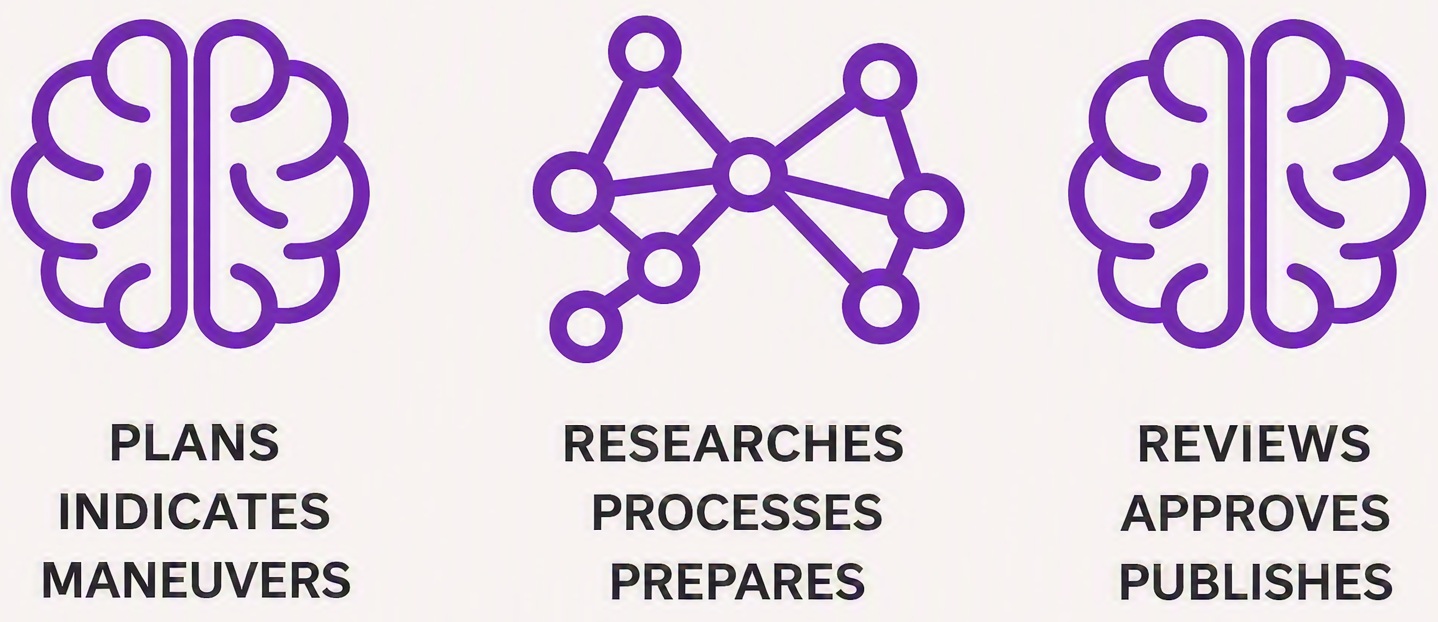
An AI workflow is not opening ChatGPT and typing a question. It is a deliberate sequence of steps where the output of one tool feeds the input of the next — with you in control of each transition.
The practical difference: a user without a workflow asks the model to "write an article about X" and accepts the result as is. A user with a workflow uses the model to research, then to structure, then to draft, then to review — with human validation moments between each step. The second product is incomparably better.
Step 1: Define the Deliverable Precisely
Before opening any AI tool, answer three questions: What is the final product (specifically, not vaguely)? Who will consume it? What is the quality criterion? This 10-minute briefing saves 2 hours of rework.
Step 2: Build the Workflow Skeleton
Every AI workflow has four generic phases — regardless of the deliverable: Research (Perplexity AI, NotebookLM); Structure (main language model, structure-only prompt); Generation (section by section, never all at once); Refinement (editorial critique prompt + human polish).
Step 3: Build Your Phase Prompts
Each phase has a standard prompt you will reuse and adapt. Research prompt: "Research [topic] focusing on [specific angle]. List the 5-7 most relevant findings with sources. Prioritize data from the last 18 months." Structure prompt: "Based on [previous phase input], create the structure of [deliverable] for [audience]. Format: titles and subtitles only, no text. Maximum 6 main sections." Generation prompt: "Write the [section name] of [deliverable]. Context: [paste briefing]. Tone: [specify]. Length: [word count]. Use this data: [paste relevant research]." Refinement prompt: "You are a senior editor. Review this [deliverable] and deliver: (1) list of weak points with exact location; (2) corrected version of the 3 most problematic passages; (3) overall rating 1-10 with justification."
Step 4: Document the Workflow That Worked
When a workflow produces a result you consider excellent, document it immediately: which tools were used in each phase, the exact prompts, how long each phase took, and what you would change next time. This document becomes your "workflow manual" — a real asset, as valuable as a well-built commercial proposal template.
Complete Example: Executive Report Workflow
Deliverable: 2-page executive report on AI adoption in Brazilian financial sector, for board presentation. Phase 1 — Research (20 min): Perplexity searches. Phase 2 — Structure (10 min): structure prompt to Claude. Phase 3 — Generation (30 min): 5 generation prompts, one per section. Phase 4 — Refinement (15 min): review prompt + manual polish. Total time: 75 minutes. Without a structured workflow, the same report would take 4-6 hours.
What Workflows Do Not Replace
AI workflows amplify human judgment — they do not replace it. The decision about what to research, how to structure, and what tone to use remains yours. The model executes; you direct. Poorly configured workflows with bad inputs produce bad outputs faster. Garbage in, garbage out still applies — just at AI speed.